I like myself so much better when I’m writing fiction. It isn’t that I feel I am good at it. I get completely lost in it, I don’t think about whether it is any good or not, I don’t care about the possibility that it is all crap and will never be good enough for anybody else to read. It is only when I come to read over it, to edit it, that it occurs to me that have written hundreds of thousands of words of complete and utter nonsense. And that causes me to panic, full physical heart-racing stomach-churning cold-sweat panic.
So I dawdle. I allow myself to become distracted by other things. Stuff to do with other people. Stuff for other people. But this makes me like myself less, because I don’t get lost in it, I do care very much about whether it is any good or not. And in the end, everything I do for other people feels like a little act of treachery; it is never nearly as good as it might have been.
It’s not that I have some chronic self-esteem problem, it’s just that I fuck up almost everything I do. This isn’t self-pity (it might be, I’ll tell you in a minute), it’s not that I imagine I am a bad or worthless person, but I make a cup of tea and it’s a small miracle if I manage not to spill boiling water or milk or blood. And that’s not very funny when it’s true, actually. Okay, so it is a quite funny, sometimes. But other times it causes no end of hassle, costs energy, sometimes money and generally pisses everyone off.
And it is me. It is, in part, my doing. For example, I do have poor co-ordination, which I can’t help. If I had really appalling co-ordination I would not attempt to pour boiling water into a mug to make tea, but it’s not that bad. And if I put every ounce of my concentration into the task at hand, I am less likely to spill things. I will still spill things, but less often. Thus, none of the ways in which I fuck up are completely and utterly out of my hands, whether it is to do with co-ordination, or short term memory, or absent-mindedness, or any other aspect of cognitive dysfunction and fatigue. So I am failing, me, failing, not just my wiring. Several times a day, every day. The more I do, the more I fail at. Not just practical stuff, but social stuff too and, of course, my writing.
Which, thankfully, isn’t particularly off-putting, not after ten years. The only things it stops me doing are those where the cost is very high, or where I am likely to put myself or others in danger, like if I got behind the wheel of a car, for example.
However, it does impact on the bigger picture, this chronic state of rubbishness. Always trying not to be rubbish. Always afraid of being rubbish. And always fucking up, often in ways I don’t understand.
Oh misery me! You still here? Yes, sorry, it was self-pity, after all.
I know I am holding myself back. This is getting silly really, the time I have spent on this Bloody Fucking Book. Especially this stage, which this winter has mostly been held up by such feelings not the Lurgy, which has been relatively kind to me; the first winter in many years which has not invited a significant relapse. Okay, small matter of house move, but you know I'm still doing pretty well. I put enough crap up here. If the best book I can write is complete pants, then I really have to find out sooner rather than later. Or simply give up and think or something else to do with my time on Earth.
Ah, but that’s the other thing, isn’t it? If there is absolutely no possibility of making a living out of writing, then there is absolutely no possibility of making a living out of anything. In my melodramatic moments, I feel my life depends on this. Which is as good a reason as any to postpone the great revelation, if indeed I am due such a revelation.
Nah. It must be doable; half the stuff I read is complete pants anyway, there must be room on the bookshelves of the world for me. And even if this one is pants and nobody will touch it with a barge-pole-length bookmark, at least I’ll know then I can write a book and then I can write another one which will be better. Or more saleable. I’m sure I could make up some crap about Wizards or the Catholic Church – perhaps Wizards in the Catholic Church. Or better still, Wizzard in the Catholic Church. The Pope, desperate to improve the Church’s image, employ the glam rock band Wizzard to come up with ideas. They sing, “I wish it could be Christmas everyday.” And so they make it Christmas every day (when the kids start singing and the band begins to play). And all the priests and bishops start wearing glitter and platform shoes. But somehow it all goes horribly wrong. Uh… because… of… someone with a French accent, a nasty scar and a limp, obviously! Come on, you'd buy it out of kindness.
In a bit of a hole about the book, just now. It's all such tremendous crap.
Saturday, March 31, 2007


Wednesday, March 28, 2007
I surmise with my little blue eyes
After Monday’s post, I've been thinking about ancestors. The idea of some sort of social or cultural heritage tied up with our genes is one which amuses and interests me. It especially amuses me when people – often those with a basically xenophobic agenda – like to talk about being indigenous to the UK, or England specifically. As if any of us are.
Yet even I can succumb to a degree of fantasy about my own supposed genetic past. Talking about this with one Scottish friend, he said (I'll try to do the accent),
Which kind of illustrates the nonsense of what my friend said. Whilst people and peoples do have a history and a heritage, it has very little to do with our blood, but rather who we are in this life, our social and political experiences and how they came about.
I don't know much about my family tree, but there are at least thirty different characters from whom I am directly descended, between me and the beginning of the twentieth century. By which point they are living lives quite different from mine, some in other countries and there is very little information about them. I know that many couldn’t sign their own name on the 1901 Census, leading to several different spellings of each of the relevant surnames.
However, like I say, I am very susceptible to fantasy. For example, I know at least one of my kin was a member of the IRA (freedom-fighters, unlike the Provisional IRA who were terrorists – important differential). He was executed for his troubles; I picture him as Cillian Murphy in The Wind that Shakes The Barley. Meanwhile, another of my kin was an Irish member of the British Army around the same time, who shot himself dead by accident (I fear this man is the character with whom I have most in common). And already at that point, those from whom I am directly descended had eloped to England because of a forbidden romance from either side of the political and religious divide. A story which I paint all shades of romantic in my mind.
My maternal grandmother’s family were Gypsies or Roma. The information surrounding this is rather messy, being conveyed as it is through my Gran, whose most frequent references to this heritage include the fact that her grandfather had an earring (well, I don’t suppose many chaps had earrings in the 1920s’ England, when she was growing up) and the fact that she is herself the victim of a jinx, a Gypsy Curse. My grandmother is not an especially unlucky person, but she has had some misfortune in her life, the greatest of which is an inability to appreciate what she’s got. However, she thinks she is jinxed. By the Gypsies from whom she is descended.
I like to think that there is actually a story behind this, that there was a curse that she was told about as a child. However, I suspect this was something my Gran made up. After all, I make things up about the Roma. Like about my blue eyes...
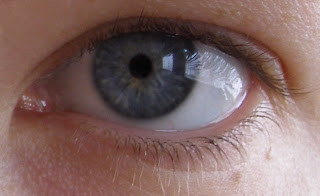 Blue-eyed people are really a very small minority, only about 8% of the world have blue eyes. Most but not all blue-eyed people are pale-skinned and fair-haired. But for example, in Northern India it is not uncommon for folks to have green or blue eyes.
The Roma are originally refugees (a status resumed several times over, including in some parts of twenty-first century Europe, alas). They left India, the Punjab in fact, in the eleventh century and made their way across the Middle East and into Europe. A lot of the Roma traditional beliefs carry echos of Hinduism, although Europeans often mistook these for the occult, black magic or whatever. Thus my Gran and her jinx.
So anyway, I decide, I must have got my blue eyes from the Roma. Forget all that ubiquitous Celt; my eyes belong to India!
Gets better. Because of course our neighbours across the North Sea, the Vikings, were also very well travelled. We know they made it as far West North America and as far East as India. And it is speculated that it is the Scandinavians who settled there at this time who injected blue into the local pallet.
Thus my theory goes that my blue eyes are very well travelled. They went half way round the world and back over the course of 1300 years.
Whereas in reality, well, it really doesn't matter. In truth, my eyes have only been as far as I have which, possibly mirroring the passage of the relevant genes, is only as far as Ireland and back.
To celebrate my extraordinarily dilute Indian heritage, here is a song. Also, my proposal of what we need to do about the railways in this country. Bare in mind that at this point in the movie Dil Se, we know this particular train is eight hours late. Don’t you think we could cope with a forty-five minute delay if everybody had a good old singsong? Especially one the like of this.
Chaiyya Chaiyya by Sukhinder Singh and Sapna Awasthi (that's not them, this is Bollywood; the chap is actor Shah Rukh Khan, the lady is Malaika Arora).
Yet even I can succumb to a degree of fantasy about my own supposed genetic past. Talking about this with one Scottish friend, he said (I'll try to do the accent),
“Ach well, that’s the Celt in ye, lassie. Them Saxon Sassenachs see the past as something which is gone and irrelevant. Whereas us Celts see the past as inextricably linked with the present, the noo. History is a people's memory, and without a memory, man is demoted to the lower animals.”Which I thought was Malcolm X, but perhaps Malcolm X had some Celt in him too; he was somewhat ginger. Actually, he did have reddish hair apparently (not evident from what photos and footage I’ve seen, but I read mention of it somewhere and added him to my list for Alexander, who seems to be heading in that direction). My limited understanding of genetics suggests that Malcolm X could not have got his gingerness from genes of European origin. However, he could well have had some Celt in him; he did have a white grandfather, and in any case, very many African American men carry a Y chromosome of European origin because of what is sanitarily described as the sexual dynamic of slavery. So Malcolm X could well have had some Celt in him.
Which kind of illustrates the nonsense of what my friend said. Whilst people and peoples do have a history and a heritage, it has very little to do with our blood, but rather who we are in this life, our social and political experiences and how they came about.
I don't know much about my family tree, but there are at least thirty different characters from whom I am directly descended, between me and the beginning of the twentieth century. By which point they are living lives quite different from mine, some in other countries and there is very little information about them. I know that many couldn’t sign their own name on the 1901 Census, leading to several different spellings of each of the relevant surnames.
However, like I say, I am very susceptible to fantasy. For example, I know at least one of my kin was a member of the IRA (freedom-fighters, unlike the Provisional IRA who were terrorists – important differential). He was executed for his troubles; I picture him as Cillian Murphy in The Wind that Shakes The Barley. Meanwhile, another of my kin was an Irish member of the British Army around the same time, who shot himself dead by accident (I fear this man is the character with whom I have most in common). And already at that point, those from whom I am directly descended had eloped to England because of a forbidden romance from either side of the political and religious divide. A story which I paint all shades of romantic in my mind.
My maternal grandmother’s family were Gypsies or Roma. The information surrounding this is rather messy, being conveyed as it is through my Gran, whose most frequent references to this heritage include the fact that her grandfather had an earring (well, I don’t suppose many chaps had earrings in the 1920s’ England, when she was growing up) and the fact that she is herself the victim of a jinx, a Gypsy Curse. My grandmother is not an especially unlucky person, but she has had some misfortune in her life, the greatest of which is an inability to appreciate what she’s got. However, she thinks she is jinxed. By the Gypsies from whom she is descended.
I like to think that there is actually a story behind this, that there was a curse that she was told about as a child. However, I suspect this was something my Gran made up. After all, I make things up about the Roma. Like about my blue eyes...
 Blue-eyed people are really a very small minority, only about 8% of the world have blue eyes. Most but not all blue-eyed people are pale-skinned and fair-haired. But for example, in Northern India it is not uncommon for folks to have green or blue eyes.
The Roma are originally refugees (a status resumed several times over, including in some parts of twenty-first century Europe, alas). They left India, the Punjab in fact, in the eleventh century and made their way across the Middle East and into Europe. A lot of the Roma traditional beliefs carry echos of Hinduism, although Europeans often mistook these for the occult, black magic or whatever. Thus my Gran and her jinx.
So anyway, I decide, I must have got my blue eyes from the Roma. Forget all that ubiquitous Celt; my eyes belong to India!
Gets better. Because of course our neighbours across the North Sea, the Vikings, were also very well travelled. We know they made it as far West North America and as far East as India. And it is speculated that it is the Scandinavians who settled there at this time who injected blue into the local pallet.
Thus my theory goes that my blue eyes are very well travelled. They went half way round the world and back over the course of 1300 years.
Whereas in reality, well, it really doesn't matter. In truth, my eyes have only been as far as I have which, possibly mirroring the passage of the relevant genes, is only as far as Ireland and back.
To celebrate my extraordinarily dilute Indian heritage, here is a song. Also, my proposal of what we need to do about the railways in this country. Bare in mind that at this point in the movie Dil Se, we know this particular train is eight hours late. Don’t you think we could cope with a forty-five minute delay if everybody had a good old singsong? Especially one the like of this.
Chaiyya Chaiyya by Sukhinder Singh and Sapna Awasthi (that's not them, this is Bollywood; the chap is actor Shah Rukh Khan, the lady is Malaika Arora).
Tuesday, March 27, 2007
Though the claith were bad, blythly may we niffer
 Today I have been sorting out my Cloth Box, attempting to reduce the contents which is spilling out the top. This was a horrible task. The trouble with my Cloth Box is that
- Every time an item of clothing or soft furnishings becomes unwearably knackered, I put that on one side with a view to using the fabric later on.
- Every time I make something, I save the remnants because they're bound to be useful at some later date.
- Meanwhile, I keep seeing lovely bits of fabric and thinking up weird and wonderful projects - especially when I have a baby nephew; there are outfits I think he'll like, Wendy Houses and wigwams, yet more soft toys. But sometimes I just buy stuff because it's cheap; I still have no idea what I'm going to do with all that PVC.
And if I wasn't having a frustrating enough time as it was, I moved awkwardly such that I ripped a hole in the skirt I was wearing, a skirt I had made, a skirt that had taken hours and hours and hours...
Monday, March 26, 2007
(not so) Great Britain
I really wanted to write something about yesterday’s 200 year anniversary of the Slave Trade Act, which abolished the British slave trade. I don’t agree with calls for an apology, because I strongly believe that in order to gain anything from the study of history, we have to be rational about it. Apologising to dead people on the behalf of other dead people is rather irrational. Casting ourselves and others in the roles of historical characters is both irrational and very dangerous, especially when we are assigned our parts according to the colour of our skin.
I believe the greatest lesson we get from the Slave Trade, and from the much greater machine of British Imperialism (which fucked over many more millions of people than it actually enslaved) is the power of moral expedience. And funnily enough, discussions about abolition over the last few weeks have brought the legacy of this to the fore.
I am genuinely fascinated about why people should feel defensive about slavery. I don’t, partly because it is indefensible, but mostly because I was not there, I have no guilt on that score. What I do have is an acknowledgement that the reason I grew up in a relatively safe and prosperous part of the world compared to others is not because Britain is inately Great and groovy, but because Britain was an aggressive military power that invaded and exploited other countries of the world and made a packet. They turned a quarter of the world pink in the days when pink was a macho colour.
Cannot be undone, alas. The impact of the British Empire, i.e. a comparison between the way things are now and what they would have been like had this not happened, is incalculable. It’s a bit like asking what the world would have been like circa 400AD – or indeed today - had the Roman Empire never existed. We’re talking about hundreds of years, many generations of people, all manner of social and scientific progress taking place at the same time. Which is not to say that we must regard the British Empire as a morally neutral fact of the past. The Roman Empire isn’t either; they committed similar atrocities, but for example, if they hadn’t happened to nail a certain Jewish political rebel to a cross for his troubles… well we just can’t imagine.
What this acknowledgement should mean, as with any position of privilege or advantage, is that we have a responsibility to help support those people and countries which are struggling, to support themselves. Which is a complicated and messy business when it comes to dynamically different cultures. But is even more complicated when you bring racism into play.
Which brings me to the most problematic demonstration of this moral expedience. There have been many daft objections made to the idea of apologising for slavery, including the fact that it wasn't just us, without the participation of African and Arab slavers, we'd never have had a trade, as well as the truly incredible idea (the most recommended comment on the BBC News Have Your Say page) that Africa should thank us for stopping slavery when we did. However the most interesting objection is probably that
The second is that slavery was never ever all right as far as one somewhat vital group of people were concerned. Who am I talking about? The Quakers? No, not them. Uh, oh yes, I remember! The slaves!
People in Africa did not weigh up their options in life and think that slavery was probably a reasonable career choice. Even though we are talking about an age in which living and working conditions for many Britons were pretty appalling, ordinary working class folk here had at least a handful of fundamental freedoms. Like being paid for work. Like not being put in chains. Like not being raped. Like being able to have relationships, families and so on without outside interference. Like being allowed to grow old. Life was tough, but life was ours.
The reason you put someone in chains is because they are not a passive victim; they do not want to experience what you are subjecting them too and they are otherwise likely to run away or defend themselves. This alone, in the absence of any of the accounts we have from slaves or former slaves, or our knowledge of slave rebellions, demonstrates that it was never all right.
However, one major legacy of the British Empire is the idea that those people don’t know any better. We were no less moral as human beings a few hundred years ago than we are today and as such, we had to justify moving in to other people’s countries in order to pinch their natural resources - a real bugger in those days, as you can hardly pass a spear off as a weapon of mass destruction. When it came to invading other European countries, this had always been argued in terms of defence or some claim involving our royal dynasties. When it came to countries several hundred thousand miles away, it became a little trickier.
At this point, race became really handy. We’re busy stealing people’s countries. Conveniently, they're all a different colour from most of us. Well, clearly these people are less intellectually sophisticated than us because they don't have guns. And although Africans were building pyramids whilst we were patting our backs at being able to make vague circles with random lumps of rock, none of these chaps is wearing a tie. Clearly, these people don’t really know their own minds. We’re doing them a favour, putting their labour to good use.
And so we start putting this in scientific and religious terms. Just as we did with women at the time, we used pseudo-scientific and religions concepts to explain how the present order of things as the natural one. But whilst women were cast as weak and silly but basically fluffy and harmless, the negro was cast as a dangerous creature, a moral, sexual and religious threat.
This particular fairy story was only written a few hundred years ago, and yet we're still struggling to dispose of it today. The trouble is the combination of this legacy and the legacy of inequality. As I'm always harping on about, folks in our society are very much wedded to the idea that bad things don't happen to good people, so when we see that the developing world, much of it our former colonies, are still, well, developing, we suspect that they're just not as Great as we are. And when we see problems in impoverished areas of the inner cities with a high black population, we tend to think that there must be something wrong with black people, as opposed to those particular people and the society in which they live.
And the greatest tradegy is that the same mentality allows us to excuse or apply moral relativism to the slavery which carries on both in the UK and elsewhere. Those people don't really know any better. They've got themselves into trouble. If they were really suffering, and they had their wits about them, well then surely they could get away and do something else?
Two important points about this post. The first is that I've use the first person plural in the vaguest of senses. It wasn't really us or we that did this stuff, but it is my society that carries the legacy I describe. The second is that the picture is much bigger than this, but I only know my own country.
The weirdest media coverage of the abolition anniversary was a radio play on Radio Four called Slavery... the Making Of, which you can listen to any time the next week. It starred Lenny Henry and Brian Blessed. No, I am serious. I am yet decided on whether this was immensely brave, or immensely silly. I'm thinking probably a bit of both.
I believe the greatest lesson we get from the Slave Trade, and from the much greater machine of British Imperialism (which fucked over many more millions of people than it actually enslaved) is the power of moral expedience. And funnily enough, discussions about abolition over the last few weeks have brought the legacy of this to the fore.
I am genuinely fascinated about why people should feel defensive about slavery. I don’t, partly because it is indefensible, but mostly because I was not there, I have no guilt on that score. What I do have is an acknowledgement that the reason I grew up in a relatively safe and prosperous part of the world compared to others is not because Britain is inately Great and groovy, but because Britain was an aggressive military power that invaded and exploited other countries of the world and made a packet. They turned a quarter of the world pink in the days when pink was a macho colour.
Cannot be undone, alas. The impact of the British Empire, i.e. a comparison between the way things are now and what they would have been like had this not happened, is incalculable. It’s a bit like asking what the world would have been like circa 400AD – or indeed today - had the Roman Empire never existed. We’re talking about hundreds of years, many generations of people, all manner of social and scientific progress taking place at the same time. Which is not to say that we must regard the British Empire as a morally neutral fact of the past. The Roman Empire isn’t either; they committed similar atrocities, but for example, if they hadn’t happened to nail a certain Jewish political rebel to a cross for his troubles… well we just can’t imagine.
What this acknowledgement should mean, as with any position of privilege or advantage, is that we have a responsibility to help support those people and countries which are struggling, to support themselves. Which is a complicated and messy business when it comes to dynamically different cultures. But is even more complicated when you bring racism into play.
Which brings me to the most problematic demonstration of this moral expedience. There have been many daft objections made to the idea of apologising for slavery, including the fact that it wasn't just us, without the participation of African and Arab slavers, we'd never have had a trade, as well as the truly incredible idea (the most recommended comment on the BBC News Have Your Say page) that Africa should thank us for stopping slavery when we did. However the most interesting objection is probably that
We cannot and should not apologise for something which everyone thought was all right at the time.Two major flaws with this argument. The first is that generally, people who do bad things think they are doing the right thing at the time, or else don’t realise that what they are doing is so very bad. That’s why people say sorry, having realised their mistake; really bad people don’t say sorry because they never realise their mistake.
The second is that slavery was never ever all right as far as one somewhat vital group of people were concerned. Who am I talking about? The Quakers? No, not them. Uh, oh yes, I remember! The slaves!
People in Africa did not weigh up their options in life and think that slavery was probably a reasonable career choice. Even though we are talking about an age in which living and working conditions for many Britons were pretty appalling, ordinary working class folk here had at least a handful of fundamental freedoms. Like being paid for work. Like not being put in chains. Like not being raped. Like being able to have relationships, families and so on without outside interference. Like being allowed to grow old. Life was tough, but life was ours.
The reason you put someone in chains is because they are not a passive victim; they do not want to experience what you are subjecting them too and they are otherwise likely to run away or defend themselves. This alone, in the absence of any of the accounts we have from slaves or former slaves, or our knowledge of slave rebellions, demonstrates that it was never all right.
However, one major legacy of the British Empire is the idea that those people don’t know any better. We were no less moral as human beings a few hundred years ago than we are today and as such, we had to justify moving in to other people’s countries in order to pinch their natural resources - a real bugger in those days, as you can hardly pass a spear off as a weapon of mass destruction. When it came to invading other European countries, this had always been argued in terms of defence or some claim involving our royal dynasties. When it came to countries several hundred thousand miles away, it became a little trickier.
At this point, race became really handy. We’re busy stealing people’s countries. Conveniently, they're all a different colour from most of us. Well, clearly these people are less intellectually sophisticated than us because they don't have guns. And although Africans were building pyramids whilst we were patting our backs at being able to make vague circles with random lumps of rock, none of these chaps is wearing a tie. Clearly, these people don’t really know their own minds. We’re doing them a favour, putting their labour to good use.
And so we start putting this in scientific and religious terms. Just as we did with women at the time, we used pseudo-scientific and religions concepts to explain how the present order of things as the natural one. But whilst women were cast as weak and silly but basically fluffy and harmless, the negro was cast as a dangerous creature, a moral, sexual and religious threat.
This particular fairy story was only written a few hundred years ago, and yet we're still struggling to dispose of it today. The trouble is the combination of this legacy and the legacy of inequality. As I'm always harping on about, folks in our society are very much wedded to the idea that bad things don't happen to good people, so when we see that the developing world, much of it our former colonies, are still, well, developing, we suspect that they're just not as Great as we are. And when we see problems in impoverished areas of the inner cities with a high black population, we tend to think that there must be something wrong with black people, as opposed to those particular people and the society in which they live.
And the greatest tradegy is that the same mentality allows us to excuse or apply moral relativism to the slavery which carries on both in the UK and elsewhere. Those people don't really know any better. They've got themselves into trouble. If they were really suffering, and they had their wits about them, well then surely they could get away and do something else?
Two important points about this post. The first is that I've use the first person plural in the vaguest of senses. It wasn't really us or we that did this stuff, but it is my society that carries the legacy I describe. The second is that the picture is much bigger than this, but I only know my own country.
The weirdest media coverage of the abolition anniversary was a radio play on Radio Four called Slavery... the Making Of, which you can listen to any time the next week. It starred Lenny Henry and Brian Blessed. No, I am serious. I am yet decided on whether this was immensely brave, or immensely silly. I'm thinking probably a bit of both.
Saturday, March 24, 2007
Ask no questions, hear no lies
In recent weeks there have been a few posts about being asked about your impairment by strangers, the ones that I can remember were by Bint Alshamsa at My Private Casbah and then Imfunnytoo wrote about it just last week. If anyone can remind me who else has written about this in the last month or so, please do so.
As I’m sure I’ve said before, I find it a terrific bore to talk about my condition as a pathology. I think this is partly due to my particular label, partly due to the fact that illness becomes an extraordinarily boring subject to those of us with it, at least after the initial wow, my body is complicated! phase (during which we may go into some detail without invitation, subject complete strangers to Powerpoint presentations and consider taking a degree in medicine in order to better understand ourselves and formulate a cure). However, why lay people you hardly know would be interested, I don't know.
Bint describes how in the American South, she doesn't feel uncomfortable about people asking, because folks there talk about anything. I found this interesting; Bint has cancer, which I guess everyone has heard of and understands the idea of. I imagine there are some uniquely troublesome reactions (my own Gran won't even say "the C word" out loud (or indeed the word cancer, he he)). But I wonder whether I would feel differently if I had a different label. As it is, for me, such conversations almost inevitably lead to
I’m not very good at telling people that it’s none of their business. In fact, I have never done that. Fortunately people do tend to ask the wrong questions. Questions such as
“So what’s wrong with you?” which is really asking for it, frankly.
“Well since you ask, I guess I’m a bit of a perfectionist, and I think sometimes people are intimidated by my intelligence and good looks. So, what’s wrong with you?”
Otherwise it is “So why are you in a wheelchair?” After all, nobody ever asks when I’m not using the wheelchair; when I behave differently people assume I have a temporary illness, ladies’ troubles or else am an eccentric.
This is met with the polite and perfectly accurate, “I have a lot of pain my legs which means I cannot walk very far.”
This is sometimes followed up by “Why is that?”
Which, in turn, is met with the polite and perfectly accurate, “Because my muscles don’t metabolise oxygen properly, which results in excessive lactic acid production.”
This is almost always where it ends. Most people either read that I’m not going to give, assume my condition is rare and complicated or else feel that it might get very technical if they question it any further.
While I'm here, anyone seriously interested in the study of social disability may be interested in reading this paper about the hierarchy of impairments that exists in the minds of both disabled and non-disabled people - something I have written about before and read about elsewhere, but only really seen it touched on in a rather vague and anecdotal manner in academic writing.
As I’m sure I’ve said before, I find it a terrific bore to talk about my condition as a pathology. I think this is partly due to my particular label, partly due to the fact that illness becomes an extraordinarily boring subject to those of us with it, at least after the initial wow, my body is complicated! phase (during which we may go into some detail without invitation, subject complete strangers to Powerpoint presentations and consider taking a degree in medicine in order to better understand ourselves and formulate a cure). However, why lay people you hardly know would be interested, I don't know.
Bint describes how in the American South, she doesn't feel uncomfortable about people asking, because folks there talk about anything. I found this interesting; Bint has cancer, which I guess everyone has heard of and understands the idea of. I imagine there are some uniquely troublesome reactions (my own Gran won't even say "the C word" out loud (or indeed the word cancer, he he)). But I wonder whether I would feel differently if I had a different label. As it is, for me, such conversations almost inevitably lead to
- Confusion about medical labels. “Isn’t that what Stephen Hawking has?” Uh no. There are many long words and acronyms in medicine, Stephen Hawking only has a small handful.
- Misplaced empathy. “Oh, I think I have a bit of that; I have all sorts of aches and pains and I’m tired all the time.” or "I know how you feel; I had a cold last month and I didn't feel like leaving the house for days."
- Overblown sympathy. "Oh my! That must be awful for you. I can't imagine how you cope. If I had that/ had to use a wheelchair/ couldn't go clubbing at the weeknd, I would kill myself!"
- An anecdote about someone they knew/ read about in the paper/ just invented who had this condition and died horribly/ never needed a wheelchair, in fact ran several marathons/ recovered completely through the power of North Tibetan Flatulence Therapy. Often this is combined with further confusion about medical labels.
I’m not very good at telling people that it’s none of their business. In fact, I have never done that. Fortunately people do tend to ask the wrong questions. Questions such as
“So what’s wrong with you?” which is really asking for it, frankly.
“Well since you ask, I guess I’m a bit of a perfectionist, and I think sometimes people are intimidated by my intelligence and good looks. So, what’s wrong with you?”
Otherwise it is “So why are you in a wheelchair?” After all, nobody ever asks when I’m not using the wheelchair; when I behave differently people assume I have a temporary illness, ladies’ troubles or else am an eccentric.
This is met with the polite and perfectly accurate, “I have a lot of pain my legs which means I cannot walk very far.”
This is sometimes followed up by “Why is that?”
Which, in turn, is met with the polite and perfectly accurate, “Because my muscles don’t metabolise oxygen properly, which results in excessive lactic acid production.”
This is almost always where it ends. Most people either read that I’m not going to give, assume my condition is rare and complicated or else feel that it might get very technical if they question it any further.
While I'm here, anyone seriously interested in the study of social disability may be interested in reading this paper about the hierarchy of impairments that exists in the minds of both disabled and non-disabled people - something I have written about before and read about elsewhere, but only really seen it touched on in a rather vague and anecdotal manner in academic writing.
Friday, March 23, 2007
Everybody wants to dance with my baby
We had a lovely day yesterday when Rosie and Alexander came to visit. Alex spent a lot of time rolling about on our sofa, laughing, gurgling and attempting to pull his uncle's beard off. Rosie played on our drums and caused me some embarrassment when she opened the newly arrived copy of Shaggy Blog Stories at random and found two shocking spelling mistakes on a page I had proof-read. Oh the shame!
In the afternoon, Rosie, Alex and I went out for a drive and saw a deer in the forest. We decided we wanted a cup of coffee and having become rather lost, we ended up at a furniture shop which happened to have a rather nice restaurant. But honestly, if you use a wheelchair and feel you get a lot of uninvited attention; try putting a baby on your lap. There were gasps. "Oh how lovely!" they cry, "Isn't he gorgeous?!" The lady in the restaurant gave me too much change, and when I pointed this out she said, "Oh, but I was completely distracted!"
Really, I know I think Alexander is a darling but I'm allowed to; he's my nephew. Are other people like this towards all babies? There are babies all over the place; it must be exhausting for them.
Still, it was a great day. Very tiring, but worth it.
In the afternoon, Rosie, Alex and I went out for a drive and saw a deer in the forest. We decided we wanted a cup of coffee and having become rather lost, we ended up at a furniture shop which happened to have a rather nice restaurant. But honestly, if you use a wheelchair and feel you get a lot of uninvited attention; try putting a baby on your lap. There were gasps. "Oh how lovely!" they cry, "Isn't he gorgeous?!" The lady in the restaurant gave me too much change, and when I pointed this out she said, "Oh, but I was completely distracted!"
Really, I know I think Alexander is a darling but I'm allowed to; he's my nephew. Are other people like this towards all babies? There are babies all over the place; it must be exhausting for them.
Still, it was a great day. Very tiring, but worth it.
Wednesday, March 21, 2007
Nobody does it better, makes me feel sad for the rest
When I was small, I loved James Bond. I wanted to be James Bond. I watched the films, I read the books and I even went through a phase of wearing a black bow-tie, which is perhaps a little odd for an eight year old girl.
When I realised that I wasn't actually going to grow up to be a man (an illusion I had been under for some time), I looked to the women in the Bond films. Well, I say women, but these are Bond Girls, and are referred to as girls throughout the films. Perhaps because they behave like girls, like the girliest of girlie girls, even when they were supposed to be spies themselves or scientists or in other roles where you'd think they would need an ounce of common sense. Thus I went right off James Bond.
But watching Casino Royale last night (which is pretty good by the way), it occurs to me that there may still be a role in the world of Bond that I can still aspire to.
Let me just check the list now. I guess I need...
1. A name which sounds exotic, sinsiter or has the word gold somewhere in it. Well that's sorted; I am the Goldfish. I'm sure Shirley Bassey could sing a song about me over a graphic sequence involving naked ladies and revolvers for the opening titles.
2. Facial disfigurement, suggesting vanity is at the heart of my megalomania. Well, I have acne and while this isn't much to complain about, it is often a relatively minor disfigurement that marks the villain out. One gets the impression that, should any wealthy man wake up and notice a half decent zit on his nose, his soul would turn instantly to darkness.
3. An emasculating physical impairment rendering one unable to take Bond on in hand-to-hand combat. Yeah, I've got one of those. When you met Mr Le Shifty, the baddie in Casino Royale, you knew not to trust him because he had asthma.
4. An imposingly proportioned sidekick, who says little, has some martial arts training and preferably some sort of violent gimmick. Yup. Not sure about the gimmick though.
5. A hi-tech secret lair. Well, we have a wireless Internet connection and I'm sure I could quite happily conduct a life of super-villainy from this location and nobody would suspect a thing. I even have a mobile phone somewhere, but it doesn't have a SIM card.
6. At least one beautiful female lover with a saucy-sounding name who is prepared to betray me at the drop of a double-entendre. Hmm, I’ll have to work on that. The head of Scarborough Council is called Eileen Bosomworth, which I always considered a great name for a Bond Girl. As is Virginia Bottomley, come to think of it.
7. A deep-seated ambition to take over the world, destroy the world and/ or make a lot more money than I'll ever need. That's true actually. I know I go on a lot about liberty and equality, but really I'd much rather people just did what I told them. I'm sure the world would be a better place for it.
8. A good imagination for slow and elaborate ways with which I might dispose of my nemesis, preferably involving animals. I reckon I can manage this. I could cover James Bond in peanut butter and set the squirrels on him. Oh dear, now I've got a mental picture of Daniel Craig covered in peanut butter. And squirrels. Oh dear.
9. A small army of anonymous henchmen prepared to give their lives for my cause despite the fact that none of them can hit a moving target, their supplied weapons jam frequently, and they often go to their deaths in a vaguely comical manner. Now that might be a problem; I am currently rather short of henchmen. I wonder if I could recruit people through a reality television programme? My Queer Eye is how you know I'm a Bad Guy, or Celebrity Death Island. (There was Trigger Happy TV of course, but I actually quite liked that one).
Given that all stereotypes are necessarily misinformative and therefore undesirable, this has to be one of the least offensive commonplace representations of disability in film and fiction. These are chippy crips; rich and powerful, often geniuses, in fact. Okay, so there is the small matter of them being evil and dangerous, but at least they are being taken seriously. Better that than being sacharine tragic heroes or else simply absent from the picture altogether.
Of course, it's not just the Bond movies and when I think of it, there aren't many Bond villains with significant mobility impairments - although mean wheelies are a staple in action and spy movies. And I don't really get it. What is it about physical impairment which is shorthand for angelic victimhood in one context but deadly menace in another? Or is it simply the idea of power in the hands of those who are usually powerless - in the same way that wealthy and suceessful women are so frequently cast as super-bitches?
Amazingly enough, I couldn't find a list of disabled characters in Bond movies anywhere on-line. So I shall attempt to compile one - please add to it if you can think of any more. I will include those with facial scarring, but not Scaramanga's third nipple. I realise there are scars and scars; only some would result in social disability.
List of Bond Villains with Physical Impairments
Dr No (Doctor No) - double arms amputee, has bionic metal prosthetics, good for cracking nuts.
Tee Hee Johnson (Live and Let Die) - lost his arm to a aligator, has fancy metal replacement.
Jaws (Various) - has metal teeth, presumably a result of a tragic dental accident. Is also of a considerable height.
Oddjob (Goldfinger) - is non-verbal.
Whisper (Live and Let Die) - uh, speech impediment, possible respiratory illness.
Blofeld (Various) - wheelchair-user, sometimes with a facial scar.
Le Chiffre (Casino Royal) - asthma and facial scar, including a damaged tearduct which would weep blood.
Emilio Largo (Thunderball) - wears an eyepatch.
Scarpine (A View to A Kill) - facial scar.
Alex Trevelyan (Golden Eye) - facial burns.
Max Zorin (Tomorrow Never Dies) - facial scar.
Zao (Die Another Day) - facial scarring involving bits of metal imbedded in his skin.
Elektra King (The World is Not Enough) - disfigured ear.
Nick Nack (The Man with the Golden Gun) - dwarfism.
Renard (The World is Not Enough) - brain injury resulting in loss of taste, smell and experience of pain.
Mr Stamper (Tomorrow Never Dies) - neurological condition which reverses the experiences of pain and pleasure.
[The Three Blind Mice (Doctor No) - Assassins who pretended to be blind.]
When I realised that I wasn't actually going to grow up to be a man (an illusion I had been under for some time), I looked to the women in the Bond films. Well, I say women, but these are Bond Girls, and are referred to as girls throughout the films. Perhaps because they behave like girls, like the girliest of girlie girls, even when they were supposed to be spies themselves or scientists or in other roles where you'd think they would need an ounce of common sense. Thus I went right off James Bond.
But watching Casino Royale last night (which is pretty good by the way), it occurs to me that there may still be a role in the world of Bond that I can still aspire to.
Let me just check the list now. I guess I need...
1. A name which sounds exotic, sinsiter or has the word gold somewhere in it. Well that's sorted; I am the Goldfish. I'm sure Shirley Bassey could sing a song about me over a graphic sequence involving naked ladies and revolvers for the opening titles.
2. Facial disfigurement, suggesting vanity is at the heart of my megalomania. Well, I have acne and while this isn't much to complain about, it is often a relatively minor disfigurement that marks the villain out. One gets the impression that, should any wealthy man wake up and notice a half decent zit on his nose, his soul would turn instantly to darkness.
3. An emasculating physical impairment rendering one unable to take Bond on in hand-to-hand combat. Yeah, I've got one of those. When you met Mr Le Shifty, the baddie in Casino Royale, you knew not to trust him because he had asthma.
4. An imposingly proportioned sidekick, who says little, has some martial arts training and preferably some sort of violent gimmick. Yup. Not sure about the gimmick though.
5. A hi-tech secret lair. Well, we have a wireless Internet connection and I'm sure I could quite happily conduct a life of super-villainy from this location and nobody would suspect a thing. I even have a mobile phone somewhere, but it doesn't have a SIM card.
6. At least one beautiful female lover with a saucy-sounding name who is prepared to betray me at the drop of a double-entendre. Hmm, I’ll have to work on that. The head of Scarborough Council is called Eileen Bosomworth, which I always considered a great name for a Bond Girl. As is Virginia Bottomley, come to think of it.
7. A deep-seated ambition to take over the world, destroy the world and/ or make a lot more money than I'll ever need. That's true actually. I know I go on a lot about liberty and equality, but really I'd much rather people just did what I told them. I'm sure the world would be a better place for it.
8. A good imagination for slow and elaborate ways with which I might dispose of my nemesis, preferably involving animals. I reckon I can manage this. I could cover James Bond in peanut butter and set the squirrels on him. Oh dear, now I've got a mental picture of Daniel Craig covered in peanut butter. And squirrels. Oh dear.
9. A small army of anonymous henchmen prepared to give their lives for my cause despite the fact that none of them can hit a moving target, their supplied weapons jam frequently, and they often go to their deaths in a vaguely comical manner. Now that might be a problem; I am currently rather short of henchmen. I wonder if I could recruit people through a reality television programme? My Queer Eye is how you know I'm a Bad Guy, or Celebrity Death Island. (There was Trigger Happy TV of course, but I actually quite liked that one).
Given that all stereotypes are necessarily misinformative and therefore undesirable, this has to be one of the least offensive commonplace representations of disability in film and fiction. These are chippy crips; rich and powerful, often geniuses, in fact. Okay, so there is the small matter of them being evil and dangerous, but at least they are being taken seriously. Better that than being sacharine tragic heroes or else simply absent from the picture altogether.
Of course, it's not just the Bond movies and when I think of it, there aren't many Bond villains with significant mobility impairments - although mean wheelies are a staple in action and spy movies. And I don't really get it. What is it about physical impairment which is shorthand for angelic victimhood in one context but deadly menace in another? Or is it simply the idea of power in the hands of those who are usually powerless - in the same way that wealthy and suceessful women are so frequently cast as super-bitches?
Amazingly enough, I couldn't find a list of disabled characters in Bond movies anywhere on-line. So I shall attempt to compile one - please add to it if you can think of any more. I will include those with facial scarring, but not Scaramanga's third nipple. I realise there are scars and scars; only some would result in social disability.
List of Bond Villains with Physical Impairments
Dr No (Doctor No) - double arms amputee, has bionic metal prosthetics, good for cracking nuts.
Tee Hee Johnson (Live and Let Die) - lost his arm to a aligator, has fancy metal replacement.
Jaws (Various) - has metal teeth, presumably a result of a tragic dental accident. Is also of a considerable height.
Oddjob (Goldfinger) - is non-verbal.
Whisper (Live and Let Die) - uh, speech impediment, possible respiratory illness.
Blofeld (Various) - wheelchair-user, sometimes with a facial scar.
Le Chiffre (Casino Royal) - asthma and facial scar, including a damaged tearduct which would weep blood.
Emilio Largo (Thunderball) - wears an eyepatch.
Scarpine (A View to A Kill) - facial scar.
Alex Trevelyan (Golden Eye) - facial burns.
Max Zorin (Tomorrow Never Dies) - facial scar.
Zao (Die Another Day) - facial scarring involving bits of metal imbedded in his skin.
Elektra King (The World is Not Enough) - disfigured ear.
Nick Nack (The Man with the Golden Gun) - dwarfism.
Renard (The World is Not Enough) - brain injury resulting in loss of taste, smell and experience of pain.
Mr Stamper (Tomorrow Never Dies) - neurological condition which reverses the experiences of pain and pleasure.
[The Three Blind Mice (Doctor No) - Assassins who pretended to be blind.]
Subscribe to:
Posts (Atom)